Showing posts with label Birthstones. Show all posts

Southern Pearl Girls Explain Mabe vs Blister Pearl

Since I do lots of pearl posts,I have been asked what is the difference between a mabe pearl and a blister pearl by people trying to learn more about pearls.  Typically they have seen one or the other offered on a TV shopping channel and want to know why they might want it in their jewelry collection.  

Short URL for sharing posts = https://tinyurl.com/38n8kcr6

The way this Texas Pearl Girl answers is that a blister pearl is a pearl that is actually growing on the inside of the host mussel or clam shell.  Blister pearl jewelry usually includes part of the mother-of-pearl shell when they cut widely around the pearl to make a necklace or earrings.  The blister may be centered for a strand or it could be at the top or bottom of a large cut of shell for more interesting pendant  Sometimes you even get bonus blisters! If you like this natural look, then consider blisters for your collection.  Blisters may be just drilled holes in the shell to hang from an earring finding or a chain.  Or they may be in silver-tone, gold-tone, copper, or other metal settings - including sterling silver.

If you like a more classic look, then go for a mabe instead.  A mabe is typically a blister pearl cut completely off of the shell and then mounted without any shell around it.  Mabes are more expensive, possibly because of the precision cutting required.  However part of the cost is that they are in jewelry quality metals like gold or .925 silver.  Although most pearl mabes are often found in vintage or estate jewelry - it has been making a comeback in the last couple of years.  The natural blue and pink colors are the most prized but white is the most traditional. However, less pearl farmers are taking the time to culture mabes, so they may go up in price as they may end-up being rare again.   

Instead of looking for images of blisters and mabes, I thought a video would make it easier to understand. Below is a video by one of the southern Pearl Girls from Georgia with her explanation of mabes.  To find out more about their store and their repair functions, check out ThePearlGirls website or find their other videos on YouTube.


Pearls: History and Science Education


Pearls are the birthstone of June and a lot of information about pearl jewelry has been shared on this blog.  In case you want more education on pearls, you may want to view some  videos from experts.  Now to share a few good choices from GIA to increase your knowledge are shared below.  

Short link for sharing post = https://tinyurl.com/33fyem85
 
The Gemological Institute of America (GIA) offers degrees and certifications in Gemology, including specialty in Pearls.  During the COVID shutdown, they offered a series of "Knowledge Sessions" via live webinars to help educate people in the jewelry industry and others who were interested in learning more about various gemstones.  If you ever wanted to learn more about pearls, you can still check out some of those webinars on YouTube.   Below is a list of the 1 hour video seminars from their series to check out.
If you want to view older and shorter videos, check out these from the GIA 7 Pearl Value Factors of around 2 minutes each. 
Or check out these GIA videos including the highly-valued saltwater pearl types and the less expensive freshwater versions of 1-2 minutes each.
Sea Pearls

Birthstones by Day of the Week!

Almost everyone is familiar with their birthstone, which is traditionally assigned according to the month in which one is born.  A few people may know that they can instead choose to use the stone associated with their zodiac sign as an alternative to the traditional monthly gemstone.  Did you know that another alternative to choosing a birthstone to wear is by day of the week?  Therefore, if you do not like your monthly birthstone or astrological stone, then you can find out what day of the week you were born and choose that stone instead.  Check out the daily choices suggested by the  International Gem Society (IGS) in chart below.

Day of the Week
Birthday Stone Choices
Phenomena Alternatives
Sunday
Monday
Pearl or Rock Crystal
Tuesday
Star Sapphire 
Wednesday
Amethyst or Lodestone
Star Ruby
Thursday
Sapphire or Carnelian
Cat’s Eye
Friday
Alexandrite or Cat’s Eye
Saturday

If you like the day of week idea, you may also find the below video of old nursery rhyme describing a child 's personality by day of birth interesting?  Personally it was wrong for me, but still cute.  If you like the poem, you can also download the words as a poster from Familii blog.

American Gemstones: Texas has Topaz, Pearls, and More

As I continue to journey through birthplace stones of the USA, I decide to go to check out options for the big state of Texas.  

TOPAZ - The official Texas state gemstone (since 1969) is Blue Topaz and the state also has a special state cut called Lone Star used for turning gemstone rough into jewelry quality stones.  Topaz for jewelry is covered in birthstones post of this blog (Blue=December, Gold=November).  Next time you visit Texas, consider going to dig for topaz as part of the trip..

PEARLS - Yes, Texas has pearls.  Some Texas lakes and rivers are known for edible oysters and some mussels that produce freshwater pearls.   These mussels are mostly harvested for “beads” to start cultivating larger pearls in China.  Texas even has its own rare Concho pearl which comes in pink –peach-purple colors and irregular shapes, rather than the normal white round people think of when they hear pearls.  Few of these rare pearls are jewel quality, although still nice collector items.  A Concho pearl that is gem quality usually made into jewelry by local artisans.  Mother of pearl from the mussel shells is experience resurgence in jewelry as a low-cost gemstone alternative and because it can be carved for additional interest.  Before this new interest, mother of pearl was mostly featured in Native American jewelry and buttons for clothing in the West.  Unfortunately, Texas mussels do not create highly lustrous mother of pearl, so it is mainly the exported nuclei for future imported pearls of the East.   Now that you know about Texas pearls, find out what is happening in the little known world of Texas mussels, clams, and oysters.

MORE - Texas offers lots of gemstones besides the state stone of Blue Topaz.  In Central Texas you can prospect for: agate (chalcedony, onyx), feldspar, fluorite, garnet, jasper, opal, tourmaline, and quartz gemstone rough.  Or search for the precious metals of copper, gold, pyrite, silver. or other ores.  Maybe you are not a gem hunter or pearl diver, but still a rock hound - you can find different rocks, geodes, and fossils in Texas too.  Yes, Dinosaurs have been found in Texas!  Before doing any digging or diving anywhere in Texas, make sure you have the appropriate licenses and permissions so you don't end up with a fine or in jail...

Short URL for sharing post = https://tinyurl.com/mrywh2ct  

For other official Texas state nature items like bird, flower, tree - visit Lone Star Junction.


American Gemstones: Oregon has Opal, Sunstone, and More

On this blog, birthstones and astrological stones have been featured. I thought it might be interesting to think about birthplace stones of the USA for those who would like jewelry from the state they were born in or currently live in.  I could have started with any of the 50 states, I chose Oregon because a new gemstone was found there in the last year.

OPAL - Most of us think of Australian, Ethiopian, or Mexican when we hear someone say opal because we think or color-play or fire opals.  However, there are common opals (aka potch) found in Peru and the USA.  Recently a new color of common opal was found in Oregon, where other colors exist.  This new peach color was bought by and featured on ShopLC. Below is part 2 of ShopLC approximate 3-4 minutes each 3-video series on peach opal, as it is mostly about the stone.  If desired, you can also watch part 1 about the mining family and part 3 the after-mining processes.  The above mine find also produces a variety of pink opal.  Some Oregon mines produce common blue and blue jelly opals as well.

SUNSTONE - Another gem of Oregon is the feldspar called Sunstone.  This is typically a transparent to translucent stone that ranges from clear to yellow to orange background with goldish glitter inside. Thus the name sunstone because the colors and glow of the sun. Sunstone is sometimes confused with peach moonstone or goldstone.   The easiest way to tell the difference from its sister stone of moonstone is that glitter will be in sunstone whereas moonstone has more of a schiller.  The difference in sunstone and goldstone is the latter is opaque (more of a solid background color but with glitter).  Other Oregon gemstones that range from transparent to translucent include varieties of amethyst and garnet.

MORE - Besides opal, opaque stones also used in jewelry from Oregon include agate, jade, jasper, obsidian, and rhyolite. These are typically set as large cabochons or made into beads. Other collector stones not often used in jewelry include fossilized/petrified wood and geodes referred to as Thunder Eggs or thunderstones.  Find out more about collecting OR stones at Gold Rush Nuggets or go to Geology.com for some great photos.

If you are a rock hound and interested in finding out about mining your own stones, check out Oregon Department of Geology and Mineral Industries.  If you are more into rock collecting than gemstones, check out pictures from the Minerals from OR Museum.  Find more on rock-hounding and the OR state rock (thunderstone) and gemstone (sunstone) on Gator Girl Rocks.


Collecting Varieties of Jasper

4 Jasper Varieties
I have been thinking of collecting jasper stones for some time.  Recently my spouse got me started on my collection with some inexpensive items containing the newest find called Bumble Bee (which is a yellow, black, and white) jasper and a small Australian jasper called Mookaite. 

Why did I think it would be such a cool stone to collect?  It is an ancient stone and jasper is one of the many stones mentioned in the Bible.  Wikipedia lists some of the stones history as “Green jasper was used to make bow drills in Mehrgarh between 4th and 5th millennium BC. Jasper is known to have been a favorite gem in the ancient world; its name can be traced back in Arabic, Persian, Hebrew, Assyrian, Greek and Latin. On Minoan Crete, jasper was carved to produce seals circa 1800 BC, as evidenced by archaeological recoveries at the palace of Knossos.”  However, most people remember this stone for the reference to “walls of jasper” in heaven.  Jasper is so well known in religious circles that there is even a Gospel trio called the Walls of Jasper.

Jasper comes in a wide range of natural colors including shades of red, yellow, brown, or green.  The word jasper stands for spotted or speckled stone.  However, it can be striped or banded as well.  Jasper is a grainy, fibrous mineral referred to as cryptocrystalline, because it is made up of very small crystals. Jasper is usually named according to the patterns that may be found within it cause by the mixing of other crystals within the rock.  The most common names include the words: picture, ribbon, brachiated, Poppy, zebra, and more. Picture jasper may be one of the most popular as people often see the resemblance of a painted landscape in them.  Poppy jasper is also very popular as it looks like it is a stone full of tiny flowers.

Why would anyone else want to collect jasper?  Jasper is great for jewelry since it has a Mohs hardness between 6.5 and 7.  It is relatively inexpensive when bought as beads or purchased in pre-made jewelry.  Also, the uncut stones look great in the top of bonsai pots, miniature cactus, or potted succulent gardens.   Stones and cabochons come both polished and unpolished.  The polished pieces look nicer for jewelry and the unpolished stones appear more natural to go with plants.

Jasper is sometimes confused with agate or chalcedony, which are other members of the quartz family popular in jewelry.   Agate is typically banded in a circular pattern of cut to show the stripes.  Jewelry quality chalcedony is typically solid colors.  Rock hounds may collect some of the dendritic varieties as well.

When researching Jasper, I found a blog listing all the types that particular gem hunter knew of, a shopping site with pictures of many types, and an article that includes a few jasper identification charts.  I also found a GemstoneSelect page on how to buy jasper, how to identify it, and where it mostly comes from  around the world.    The United States is one of the biggest sources for high-quality jasper. During my research, I also found pages listing Jasper as alternate birthstones for February. March, and October.  I found some scientific data on the semi-precious gemstone of jasper as well.

If you collect jasper and know of other great websites or photo locations you would like to share, please put them in the comments below this post.

September Sapphire – More Than Blue

I’ve done a post for the standard birthstone of each month as well as a
birthstone chart. This post will complete the top 12 with the month of September birthstone, the sapphire.  Sapphires are from the corundum family (sister stone in red is Ruby).  When shopping for birthstones or because you want a natural sapphire, you will find that most stores offer the standard shades of navy blue or midnight blue stones, which is easily found in many countries.    The most sought after shades of blue are the electric or cobalt colors known as Cashmere/Kashmir and Ceylon.  These are harder to find, although most simulant or lab grown varieties will be close to these colors.

If dark blue is not your favorite color and you were born in September, you do not have to forget about getting your birthstone Sapphires do come in many colors besides blue.  Other colors besides blue are considered “fancy,” therefore they will cost more and are harder to find in standard jewelry or department stores.  Search home shopping channels and the internet for “fancy sapphires” or enter the color desired plus the word sapphire (examples: “yellow sapphire”, “orange sapphire”, “pink sapphire”) to find the color you want. 

If you like phenomena stones (ones that have a special display), consider the star sapphire.  If you want the illusion of color change, consider Iolite.  Iolite is not corundum – it is cordierite.  However it is said to be an acceptable alternative because it has been mistaken for sapphire in the past and it carries the nickname “water sapphire.”  Iolite is typically a purplish-blue. Another stone option that might pass for a Kashmir sapphire could be the beautiful blue Kyanite.

Radiant Ruby for July Joy or Very Valentines?

Ruby Gemstone- Heart Cut
The luscious red Ruby is a sister stone to Sapphire (both are corundums) and it is the birthstone for July.  Rubies range from cloudy to clear and come in various shades of red, although the brighter color is what most people think of.  Besides color, the clarity, size, and cut (or faceting) of the stone can affect the stone’s value.

The ruby is also known as the passion stone, which may account for its popularity for Valentine’s gifts in addition to highly sought Christmas and July birthdays.  Ruby is also the anniversary stone for 15 years.  Rubies are one of the most popular expensive stones for jewelry, along with diamonds, sapphires, and emeralds. Rings, pendants, and bracelets can easily be found in most jewelry stores, department stores, and on-line shopping sites.

The most sought after rubies come from Burma, but those are currently boycotted for USA.  Many other rubies are being discovered, most require fissure filling to prevent bubbles within the stone from causing it to crack.  These are less valuable, but some are just as pretty as the Burma stones.  For the most transparent of rubies, you typically have pay a lot or go for lab-grown version.  Lab growth usually prevents fissures and is can be about the same price as natural rubies.  The other alternative is simulants or colored crystals, which should be cheaper in price because they are fake versions.

Looking for a unique ruby?  Many have heard of star sapphires, but occasionally the ruby sister stone also is found with asterism.  Ruby can also grow with other minerals to create a variety of stones with ruby in the name.  However, not every stone that is titled ruby is really a ruby, be aware of the varieties and possible frauds if you are looking for a variation to add to a ruby collection or prefer unique items verses standard faceted stones.

Short URL for sharing = https://tinyurl.com/ydcuupbk 

Alexandrite and Simulant Variations: A traditional birthstone for June

Alexandrite
Color-change
Is pearl really the main birthstone for June?  It is the primary precious stone and has been on the US birthstone chart since 1912.  However, the traditional birthstone is rare and therefore very expensive.  The stone is Alexandrite, which was discovered in 1834 and named for the on-throne Russian Tsar.  Alexandrite is the color-change version of chrysoberyl and comes from many countries.  Most often the quote that goes with Alexandrite is “emerald by evening and ruby by day,” because it shifts from blue/green to red/purple depending on the light source.  However, it really can be a variety of colors depending on where it is mined. The gemstone designation is merely for true-color change with a specific chemical make-up, not for a particular color.

There are various simulants and lab-grown versions of Alexandrite.  The best lab-grown Alexandrite comes from Russia, which is where the original stones were from so they know how to imitate the chemical composition.  Newer simulants have great and quick color-change.  Look for variations of the Alexandrite name such as Zandrite or Alexite to find the simulants.  Simulants should be cheaper than the real thing, but beware as not everyone will tell you whether you are getting natural or created Alexandrite. 

The best bet for buying natural, simulants, or lab-created may be home shopping channels.  Check JTV, SHQP, LC, HSN, and EBAY.  Otherwise jewelry containing this gemstone would be beyond most people’s price point at a fine jewelry store, if they even have it in stock.

Elegant Emerald is May-Baby’s Main Mineral

Emerald Stone - Oval Cut
The precious gemstones are first diamond, then: sapphire or ruby corundum along with emerald from the beryl family of stones.  These 4 stones were once only available to royalty or the very rich.  Now that there are more deposits found in various locations and lab created versions exist, these stones have become available to many more people.  This is a good thing since they are also birthstones that can appear in jewelry celebrating an individual birth or in Mother’s Day rings, pins, and pendants.  This stone has many gift-giving purposes, including use as an anniversary stone for 30, 35, and 55 years of marriage.

Emerald is the elegant green birthstone for those born in May.  Its rich color not only celebrates spring, but it is so well-known that fashion experts know the color when the name is mentioned.  It also was selected this as the color of the year for 2013 in fashion.  Besides being a fashion statement, emeralds have a special stone cutting named after them because it shows off the stone best.  That cut is now being used in other gemstones as a way to show lack of inclusions and enhanced clarity.  As with many gemstones, emerald also has its own folklore and an interesting history.

Real emeralds can be found in just about every jewelry store for expensive prices and occasionally in department stores that have high-end jewelry counters.  True natural emeralds will typically have a cloudy or included appearance and may be treated to bring out more color or hide imperfections.  So beware when shopping for emeralds so you know what to look for if you want the real thing.  For sure lab-created and simulated emeralds can be found in most department stores and as often special sales items in major jewelry locations during the month of May and for certain holidays. 

If real emeralds are too cloudy for your personal taste, in other words – you like more sparkle.  Or perhaps you just cannot find the money in your budget to spend on a single piece of jewelry…  Consider either a lab-created, simulated version, or substitute Chrome Diopside.  Chrome Diopside is also known as Siberian Emerald or Russian Emerald since this is where it comes from.  Diopside is not an emerald but the color and clarity is even more beautiful than the natural emeralds.  You will not find this stone in most jewelry or department stores.  To find it, you will have to shop on-line at locations like JTV, ShopNBC, and HSN. 

POST SHORT URL = https://tinyurl.com/u7d9nkjz  

Absolutely Diamonds for April Gals

Everyone believes the song that says “diamonds are a girl’s best friend”, at least in the world of jewelry.  A true BFF responds with more than a sparkle when you talk to them.  For women born in April, diamonds are even truer as favorites since it is their birthstone.  This can make other females jealous whose birth gave them semi-precious stones instead of diamonds, and the other precious stones: beryls (emeralds and aquamarines), or corundums (sapphires and rubies). 

Standard white diamonds go with everything.  These add glitter and glam to any outfit from t-shirt and jeans to evening gowns.  However, there are colored diamonds too, which may be matched or contrasted to outfits.  Since colored diamonds are rare, they are referred to as “fancy” in the realm of jewelry.  Natural vibrant colors used to be quite rare and required great wealth to own.  Now with new treatment methods, colored diamonds are more readily available and affordable.  Although, you may have to go through shopping channels on TV or the internet to get colors other than chocolate (made famous by Levian) or black (a.k.a. carbonado).  Many jewelry and department stores only carry the basic white (which is still very popular for engagement rings and cocktail rings) and the newer black. 

If you want diamonds, but find the prices too expensive for everyday wear.  Consider lab or synthetic versions.  Moissanite is an expensive meteor-created diamond known for its extreme sparkle-factor.  Of course there are several synthetic diamond brands (Absolute, Bella Luce, Brilliante, Diamonique, etc.) offered by various shopping channels.  You also still have the option of old-tried and true cubic zirconia, which was modeled after natural zircon and not diamonds. You might find rhinestones, but these are old-style so they are more likely in collectable antique jewelry.  If you want natural stones rather than synthetic, consider less expensive gemstones such as zircon, topaz, or quarts – many of the clear varieties mimic white diamonds, especially when used as accent stones. 
Please note that jewelry labeled with “diamond accents” typically means tiny diamond(s) somewhere on the piece of jewelry.  The definition of diamond accent is jewelry with one or more diamonds which has a combined carat weight of less than one-fourth of a carat. Often the sparkle of a piece of diamond accent jewelry is caused by stippling or beading within the metal on the piece rather than diamonds.  To make diamond jewelry more affordable, consider “diamond chic” instead as it is usually more diamonds set in silver or overlaid with gold instead of the traditional full gold setting.

Amazing Amethyst is a Fabulous February Find

Amethyst Geode
Amethyst is the quartz birthstone for February.  It was once consider the color of royalty and common-folks were not allowed to wear it.  Now it is available to anyone and often at very reasonable prices. It is quite a find in jewelry and is given just as much as red or pink stones for Valentine’s Day. So shop for the look and color you like best at department stores like Kohls, Macys, Penney’s, Sears, or Walmart.  Or if prefer to shop from the couch for higher-end items or unusual settings, you might try HSN, ICE, or JTV.

Most people think of the color purple when looking for this mineral. The best purple stones come from Brazil and Africa, although it is mined in many countries including the U.S.  Amethyst actually comes in color ranges from lavender-rose called pink or “rose de france” to sound fancier for classic jewelry styles to a deep almost grape-color purple which is popular in large-stone cocktail rings.  It is very popular as a vibrant gem in multiple shapes regardless if it is someone’s birthstone.  In the last two years, the newest color rage is the green Amethyst, also known as prasiolite or green quartz. 

If you already are an amethyst collector or a February baby who has their birthstone in green, pink, and shades of purple.  What can you get next to make your collection more unique?  If you like the color yellow, you might consider an Ametrine.  This stone is a rare since it only comes from one place in Bolivia. It also makes a great valentine’s or anniversary (for couple with February and November birthdays) gift because of the romantic legend of its founding.  The stone is a rare phenomenon where amethyst and citrine grow together in the same stone.  The most valuable splits are 50-50 color cut ametrine.  40-60 percent split is more easily found, other splits are considered bad matching because the color difference not being as noticeable.  If you want to buy ametrine, try the home-shopping channels as most stores do not carry it.

December’s Blue Birthstones: Topaz, Tanzanite, Turquoise, and Zircon


If you have checked out a birthstone chart, you know that December has more birthstones and alternatives than any other month.  You would think that an almost-Christmas baby would have a green or red birthstone.  However the color for the month is really blue!

The primary stones people think of for December are the Blue Topaz (most found in stores) and Blue Zircon (which is almost as hard as a diamond, more rare, and usually requires special order).  Blue Zircon was the original birthstone for December and is said to go back to Biblical time.  In 1912, Blue Topaz became more popular as the suggested in the National Association of Jewelers official birthstone chart.  Although topaz comes in many colors, for December is the "shades of blue" as the other colors may be alternatives for other months.

Turquoise is noted as the birthstone by some gem authorities and it is a valid alternative on the charts.  It is also the oldest known blue stone to be mined (estimated at around 3000 B.C. in Egypt) – so it has been around as an alternative long before the others.  Some people will substitute Lapis Lazuli, which is a darker stone, for Turquoise.  Turquoise comes in many shades of the blue named for the stone with various webbing and has recently been dyed to make green, purple, and orange variations.    

Tanzanite was discovered in 1967 and first introduced by Tiffany’s.  It was added as an alternative December birthstone on the official charts in 2002 by American Gem Trade Association (AGTA).  It is a rare stone that currently comes only from Tanzania.  It is periwinkle blue (which is more of a lavender color) thus it was added to the blue stones.  Really high-quality Tanzanite may appear more bluish, such as the trade names Bondi-blue or Kutamani.  A few pieces of it have also been found in shades of green.  Be aware that Tanzanite simulants are available so be sure you are not paying the price for a true stone and getting an imitation.  Some people consider Iolite to be a darker version of Tanzanite or a companion color for it.  Iolite is a dark purplish-blue and therefore does look good mixed with other blue or purple stones.  If you are a December baby and like Iolite, go for it as your personal preferred stone rather than a true birthstone.

Please note that although Aquamarine and Sapphire are blue stones, the lighter is the primary birthstone for March and the darker is for September.  Neither are alternatives for December.

Golden Imperial Topaz or Yellow Honey Citrine for November

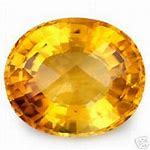
Citrine Gemstone, Oval Cut
Even without looking at a birthstone chart, most people know the November birthstone as the semi-precious Citrine, which is an affordable quartz stone typically ranging from pale yellow to a honey color.  However, the original birthstone for November was the more precious Imperial or Golden Topaz, which is a rich gold-color and rare in the natural state but it may be found in a topaz that has been color-treated.  Because the topaz was too expensive, citrine became an alternative perhaps because it is a paler version of the topaz color.  Since both are similar in color, be sure to ask if the stone is topaz (higher-price) or citrine (lower-value) to avoid confusion and being overcharged. 

In the past, imperial topaz was sought after due to color, hardness, the powers it was believed to have, and of course history.  Topaz has a Mohs hardness of around 8, so it is great for jewelry (diamonds are 10).  However, it may only be found in high-end jewelry stores and possibly on a few shopping channels.  Also, it may be colored instead of natural, so if that matters – ask the salesperson or customer service.

Or to celebrate November births, go with the easy-to-find Citrine as the primary alternative.  It is an iron-based quartz that has hardness of 7.  After all, almost everyone else goes with this since it is the easiest to find in department stores and jewelry shops.  Citrine comes in various shades of yellow; however the Madeira citrine is more orange to red  in color.  Citrine has its own history, powers, and lore – the stone name is believed to be derived from citrus lemon due to the yellow color.  When looking for a citrine, consider how to choose and cleaning requirements.

Born in the month November or not, the sunny colors of Topaz and Citrine can bring a smile to any face.  Other alternatives besides citrine to consider for the imperial might be Autumn-colored stones such as the smoky quartz or smoky topaz, they are brown instead of a golden color, champagne stones as they have much yellow, and orange-colored topaz as orange is a key coloring in the imperial.

Post short URL for sharing = https://tinyurl.com/5tb9f7df